


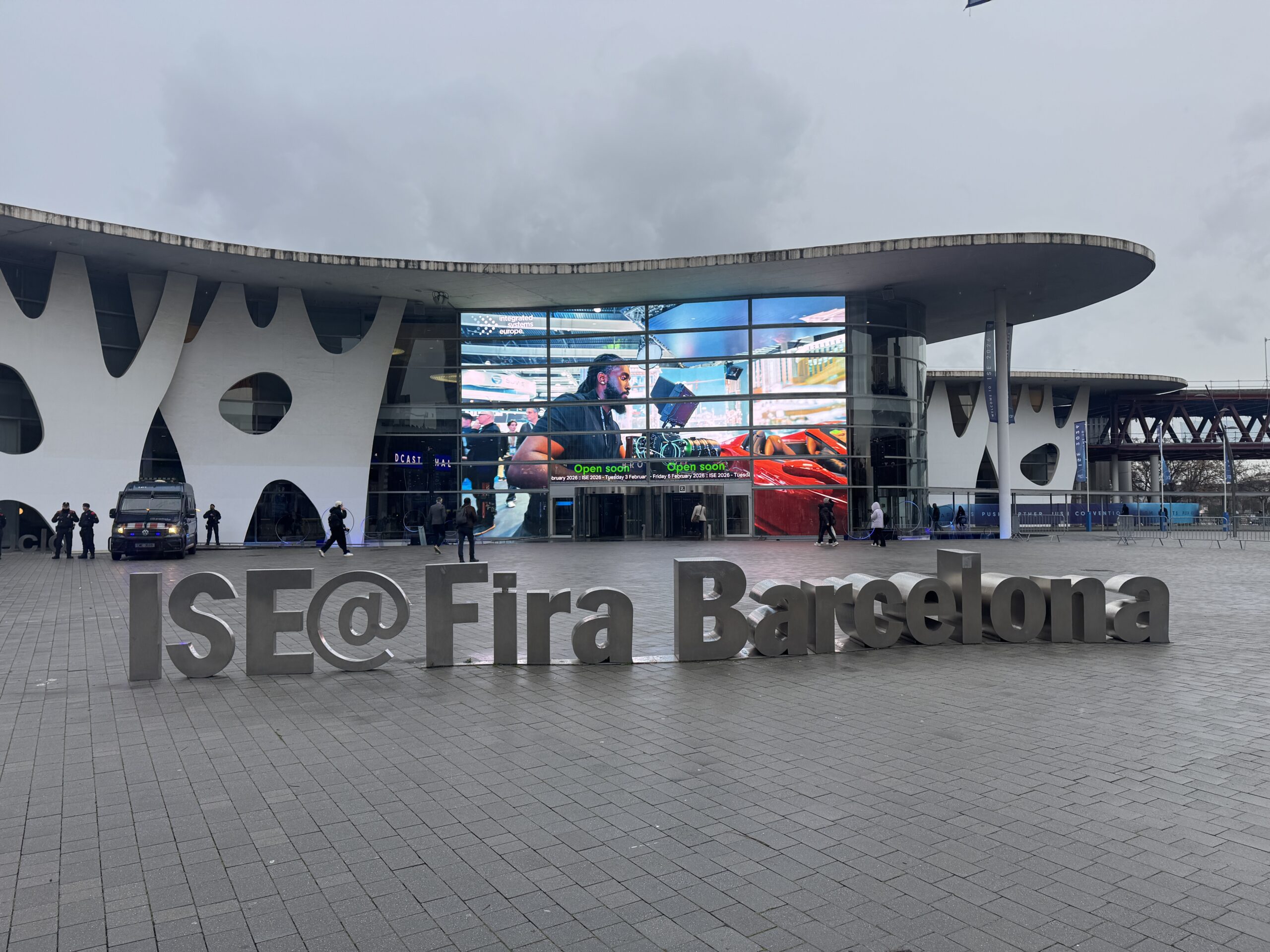
At Integrated Systems Europe (ISE) Barcelona, one message was clear: enterprise AV solutions are evolving rapidly and expectations have never been higher.
From software-defined AV control systems to direct-view LED walls and frictionless hybrid meeting rooms, enterprise organizations are prioritizing scalable, resilient, and intuitive environments.
Here are the key enterprise AV trends shaping 2026 and beyond:
1. Hybrid Meeting Rooms Must Deliver “It Just Works” Simplicity
Perhaps the most consistent message from enterprise end-users:
“It just needs to work.”
Enterprise teams expect:
- One-touch meeting start
- Zero learning curve
- Seamless hybrid collaboration
- Automated room intelligence
- Integrated video conferencing platforms
The expectation for hybrid meeting rooms has shifted from functionality to frictionless experience.
Behind the scenes, AV systems are becoming more complex — integrating cameras, microphones, control processors, DSP, cloud platforms, and room automation.
But the frontend must feel effortless.
The new gold standard in enterprise video collaboration systems is:
Complex backend. Simple frontend.
That means intelligent automation, intuitive touch panels, and invisible technology that supports — rather than interrupts — the meeting experience.
2. Direct-View LED Is Becoming the Enterprise Display Standard
Direct-view LED technology is no longer limited to broadcast studios or sports arenas. It is rapidly becoming the standard for high-end enterprise display environments.
Across ISE Barcelona, direct-view LED walls demonstrated:
- Replacement of projection systems
- Replacement of traditional flat panels in executive spaces
- Higher brightness for well-lit environments
- Improved color accuracy and seamless visual performance
In sectors like legal, corporate enterprise, and media & entertainment, experience center design is increasingly centered around immersive display technology.
Organizations are demanding:
- Seamless LED walls for executive briefing centers
- Premium boardroom display solutions
- High-impact experience centers
- Future-ready visual infrastructure
Direct-view LED walls provide not just visual performance — but architectural integration. The result is a cleaner aesthetic, better reliability, and a more immersive collaboration environment.
As hybrid work continues to evolve, visual quality is directly tied to brand perception and executive presence.
3. AV Control Systems Are Moving to Software-Defined Architectures
Traditional hardware-based AV control is giving way to software-centric, virtualized environments.
While hardware infrastructure still matters, the intelligence layer is increasingly software-driven. At ISE, we saw:
- Processing power shifting into software layers
- Expansion of virtual control environments
- Greater scalability across buildings and global office locations
- Centralized monitoring and remote management capabilities
For enterprise IT teams managing large training rooms, executive briefing centers, and multi-site video collaboration systems, this shift is critical.
Software-defined AV control systems enable:
- Faster updates and patches
- Remote troubleshooting
- Standardized user experiences across locations
- Reduced downtime and lower on-site support requirements
This approach aligns with modern IT strategies — particularly in organizations that demand visibility, security, and operational efficiency across their AV infrastructure.
The backend is becoming more sophisticated. The user experience is becoming simpler.
4. Downtime During Live Events Is No Longer Acceptable
Enterprise AV reliability is now mission-critical.
From shareholder meetings and courtroom proceedings to executive town halls and product launches, downtime during live events is unacceptable.
Organizations are prioritizing:
- Redundant system design
- Proactive monitoring and remote support
- Centralized AV management platforms
- Resilient infrastructure built for performance under pressure
Enterprise AV solutions are no longer just about image and sound quality — they’re about uptime, resilience, and operational continuity.
Reliability has become part of the user experience.
What This Means for Enterprise AV Strategy
The enterprise AV landscape is moving toward:
- Software-defined AV control systems
- Cloud-integrated management
- Direct-view LED walls as the visual standard
- Scalable video collaboration systems
- Experience center design built around immersive technology
- Hybrid meeting rooms that require zero user training
Organizations investing in modern enterprise AV infrastructure are prioritizing scalability, simplicity, and reliability while maintaining high-impact visual environments.
As seen at ISE Barcelona, the future of enterprise AV is not just about hardware innovation. It’s about intelligent systems architecture that supports hybrid work, executive engagement, and global collaboration.
The technology may be complex, but the experience should never feel that way.